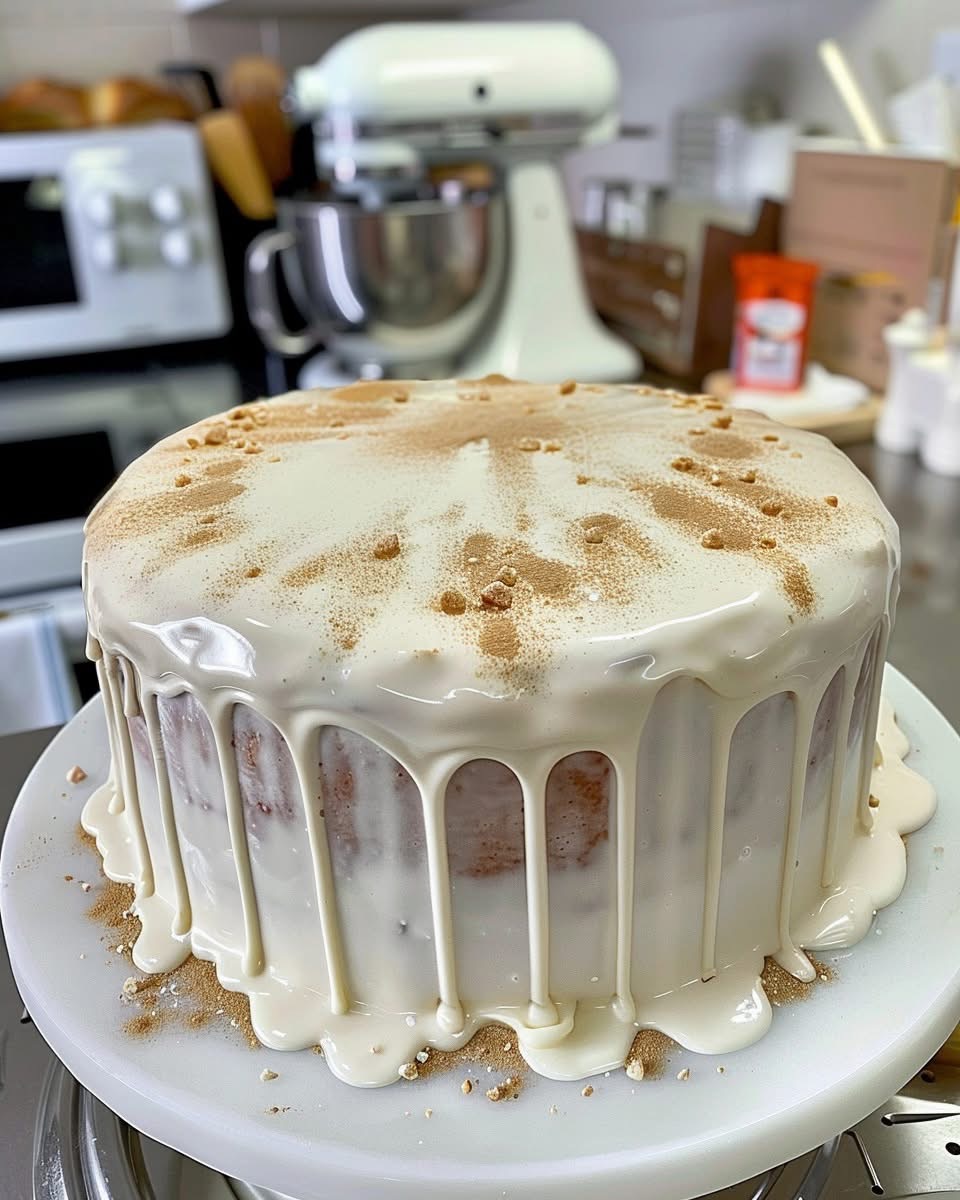
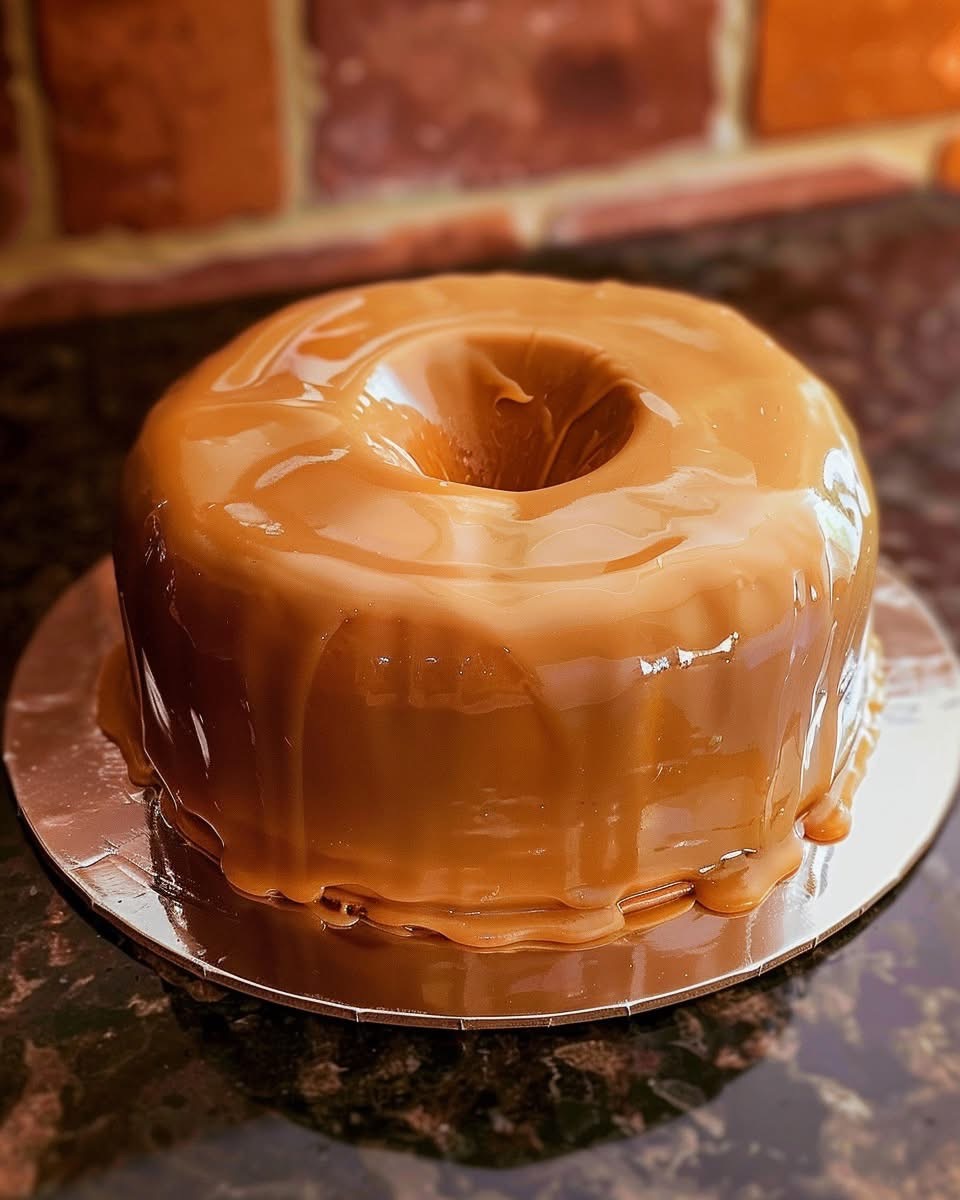
Vanilla Buttermilk Pound Cake with Cream Cheese Glaze Recipe
Ingredients
For the Cake:
2 sticks unsalted butter, softened
2 ½ cups granulated sugar
5 large eggs, room temperature
3 cups all-purpose flour
½ tsp baking powder
½ tsp baking soda
1 tsp salt
1 cup buttermilk, at room temperature
1 1/2 tsp pure vanilla extract
For the Cream Cheese Glaze:
4 oz cream cheese, softened
2 cups powdered sugar
2–3 Tbsp milk or heavy cream
1 tsp vanilla extract
Instructions
Preheat oven to 325°F. Grease and flour a bundt or tube pan.
In a large mixing bowl, cream butter and sugar until light and fluffy (about 5 minutes).
Add eggs one at a time, beating well after each addition. In another bowl, whisk together flour, baking powder, baking soda, and salt.
Add dry ingredients to the butter mixture alternately with buttermilk, beginning and ending with flour.
Stir in vanilla extract until smooth. Pour batter into prepared pan and smooth the top. Bake for about 75 minutes, or until a toothpick inserted in the center comes out clean.
Let cool in the pan for 15 minutes before inverting onto a wire rack to cool completely.
Cream Cheese Glaze:
Beat the softened cream cheese until smooth. Add the powdered sugar and vanilla, mixing well. Slowly add milk or cream until glaze is pourable but not too thin. Drizzle generously over the cake.
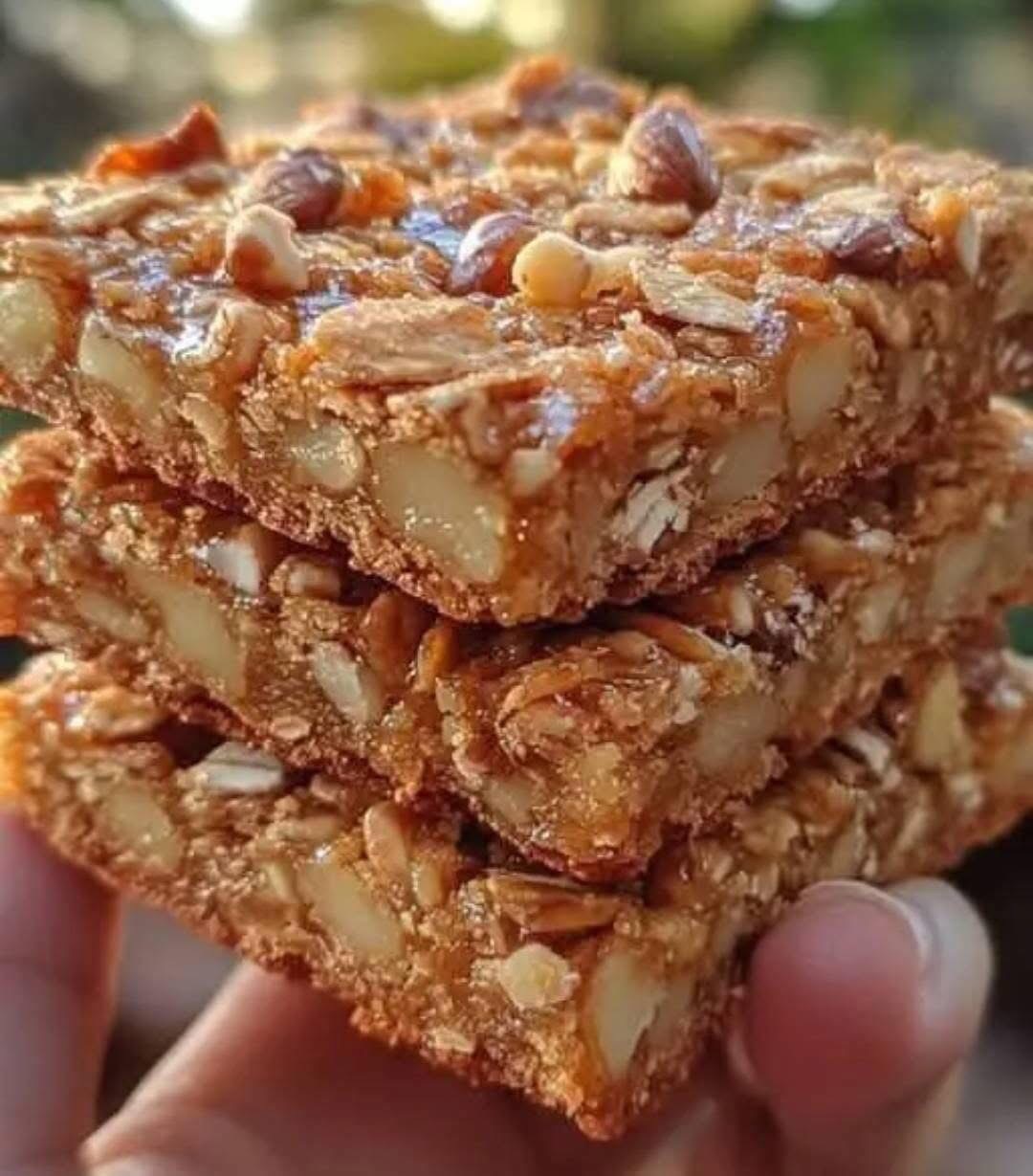
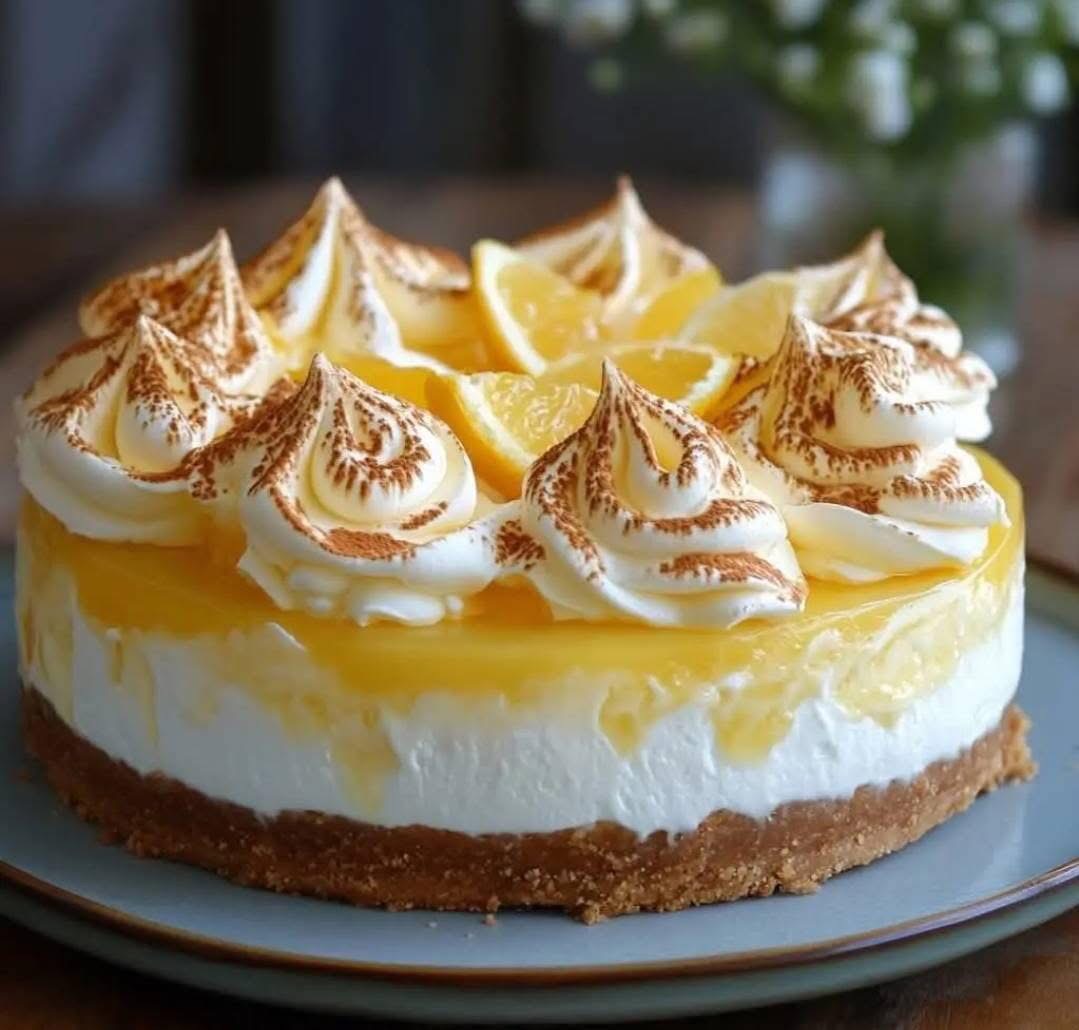
Key Lime Pie Bars
Key Lime Pie Bars
Crust
- 12 full-sheet graham crackers, crushed into crumbs (1 1/2 cups or 180g)
- 6 tablespoons unsalted butter, melted (85g)
- 1/4 cup granulated sugar (50g)
Filling
- 4 ounces full-fat cream cheese, softened to room temperature (113g)
- 4 large egg yolks
- 14-ounce can sweetened condensed milk (397g)
- 1/2 cup key lime juice (120ml)
- 2 teaspoons lime zest (from about 1 lime or 2 key limes)
- Optional garnish: whipped cream, lime slices
Preheat oven to 350°F (177°C). Line a 9-inch square baking pan with parchment paper, leaving an overhang on the sides for easy removal. Set aside.
Make the crust by combining the graham cracker crumbs and granulated sugar in a medium bowl. Stir in the melted butter until the mixture resembles wet sand. Press the mixture evenly into the prepared pan, ensuring it is tightly packed.
Prebake the crust for 10 minutes, then allow it to cool slightly while preparing the filling.
For the filling, beat the softened cream cheese with a handheld or stand mixer on medium-high speed until smooth, about 1 minute. Add the egg yolks and mix until combined, scraping down the sides of the bowl as needed. Add the sweetened condensed milk, key lime juice, and lime zest, mixing until smooth. Give the mixture a final whisk by hand to ensure there are no lumps of cream cheese.
Pour the filling evenly over the warm crust and bake for 18-20 minutes, or until the edges are set and the center is slightly jiggly.
Remove from the oven and allow the bars to cool at room temperature for 30 minutes. Transfer the pan to the refrigerator and chill for at least 2-3 hours before slicing into squares.
Garnish with whipped cream and lime slices if desired. Store in an airtight container in the refrigerator for up to 5 days.
Total calories: 2500
Prep time: 20 minutes
Cooking time: 30 minutes
Total time: 3 hours 50 minutes
Number of servings: 16
Crepes recipe
Crepes recipe
Ingredients:
1 cup all-purpose flour
2 tablespoons granulated sugar
1/4 teaspoon salt
1 1/2 cups milk
3 large eggs
2 tablespoons unsalted butter, melted
1 teaspoon vanilla extract
Instructions:
In a mixing bowl, whisk together the flour, sugar, and salt.
In a separate bowl, whisk together the milk, eggs, melted butter, and vanilla extract.
Gradually pour the wet ingredients into the dry ingredients, whisking continuously until the batter is smooth and free of lumps.
Let the batter rest for about 10-15 minutes to allow it to thicken slightly.
Heat a non-stick skillet or crepe pan over medium heat. Lightly grease the pan with butter or cooking spray.
Pour a small amount of the batter onto the heated pan, swirling it around to create a thin, even layer.
Cook the crepe for about 1-2 minutes, or until the edges start to turn golden brown.
Flip the crepe using a spatula and cook for an additional 1-2 minutes on the other side.
Transfer the cooked crepe to a plate and repeat the process with the remaining batter, greasing the pan as needed.
Serve the crepes warm with your favorite toppings such as fresh fruits, Nutella, whipped cream, or maple syrup.
You can also stack the crepes on a plate and keep them warm in a low oven until ready to serve.
Enjoy these versatile and delicious crepes for breakfast, brunch, or dessert. They can be filled and folded in various ways to create a wide range of sweet or savory treats. Get creative with your toppings and fillings to personalize your crepes to your liking.
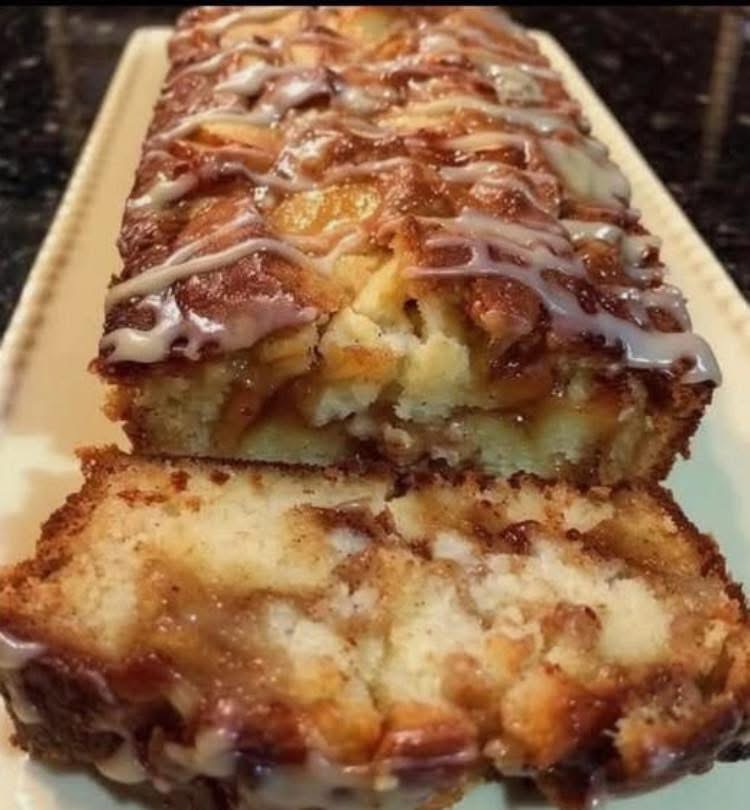
Banana Butter Cake
Banana Butter Cake
Ingredients
- 1 1/2 cups (180 grams) all-purpose flour
- 1 teaspoon baking powder
- 1/2 teaspoon baking soda
- 1/4 teaspoon salt
- 1/2 cup (115 grams) unsalted butter, softened
- 1 cup (200 grams) granulated sugar
- 2 large eggs, room temperature
- 1 teaspoon vanilla extract
- 3 ripe bananas, mashed
- 1/2 cup (120 milliliters) sour cream or yogurt
- 1/2 cup (60 grams) chopped nuts (optional) Instructions
Preheat your oven to 350°F (175°C). Grease and flour a 9×5 inch loaf pan or a 9-inch round cake pan. In a medium bowl, whisk together the flour, baking powder, baking soda, and salt.
In a large mixing bowl, cream together the softened butter and granulated sugar until light and fluffy. Add the eggs one at a time, beating well after each addition. Stir in the vanilla extract.
Mix in the mashed bananas until well combined. Gradually add the dry ingredients to the wet mixture, alternating with the sour cream or yogurt, beginning and ending with the dry ingredients. Mix until just combined. Do not overmix. If using, fold in the chopped nuts.
Pour the batter into the prepared pan and smooth the top with a spatula. Bake in the preheated oven for 50-60 minutes, or until a toothpick inserted into the center comes out clean. Allow the cake to cool in the pan for 10 minutes, then transfer to a wire rack to cool completely.
Cheat Air Fryer Pistachio Cannoli (Tortilla Wrap)
🌯💚 A quick & delicious twist on the classic cannoli! These Air Fryer Pistachio Cannoli made with tortilla wraps are crispy, creamy, and ready in minutes—no fuss, no frying oil, just pure pistachio perfection! 😍🍨
Ingredients:
For the Shells:
4 small flour tortillas (6-inch)
2 tbsp butter, melted
2 tbsp granulated sugar
1 tsp cinnamon
For the Filling:
1 cup ricotta cheese (well-drained)
½ cup mascarpone cheese
¼ cup powdered sugar (more to taste)
½ tsp vanilla extract
¼ cup finely chopped pistachios
Optional: 2 tbsp mini chocolate chips
For Garnish:
Extra chopped pistachios
Powdered sugar for dusting
Melted chocolate (optional for drizzling or dipping ends)
Instructions:
Prepare the shells: Brush tortillas with melted butter. Mix sugar and cinnamon, then sprinkle over both sides of each tortilla. Wrap each tortilla around a cannoli mold or small metal tube and secure with toothpicks if needed.
⏱️ Duration: 5 minutes
Air fry: Place wrapped tortillas in the air fryer basket. Air fry at 375°F (190°C) for 5–6 minutes until golden and crisp. Let them cool completely before removing the molds.
⏱️ Duration: 6 minutes + 5 minutes cooling
Make the filling: In a bowl, mix ricotta, mascarpone, powdered sugar, and vanilla until smooth. Fold in chopped pistachios and chocolate chips (if using).
⏱️ Duration: 5 minutes
Assemble the cannoli: Transfer the filling into a piping bag or ziplock with the tip cut off. Pipe the filling into each cooled tortilla shell. Dip ends in extra pistachios and drizzle with melted chocolate if desired. 🌟
⏱️ Duration: 5 minutes
Serve and enjoy: Dust with powdered sugar and serve immediately for best crunch! 🥳
Prep Time: 10 minutes | Air Fry Time: 6 minutes | Cooling & Filling: 10 minutes | Total Time: 26 minutes
Kcal: 220 kcal | Servings: 4 cannoli.
Christopher Walken: A Master of Versatility in Cinema
The Enigmatic Actor Who Defined an Era
Christopher Walken, born Ronald Walken on March 31, 1943, in Queens, New York, is an actor whose name is synonymous with uniqueness. Known for his distinct voice, offbeat mannerisms, and unparalleled presence, Walken has become a cultural icon. Over the course of his over six-decade career, he has brought a range of compelling and diverse characters to life, from the terrifying to the comedic, and the deeply dramatic to the absurdly eccentric. Today, Walken’s name is recognized worldwide, and his films continue to leave an indelible mark on the film industry.
While Walken’s career spans a vast array of roles, it’s his ability to transform into completely different characters with each performance that sets him apart from other actors. Walken is celebrated not only for his acting chops but for the memorable way he approaches each role. His distinctive style, voice, and charisma make every character he plays unforgettable. But how did Walken become one of Hollywood’s most beloved actors? In this article, we explore his career, the impact he’s had on the film industry, and his legacy in Hollywood.
Early Life and Career Beginnings
Christopher Walken was born to a working-class family. His father, Paul, was a baker, and his mother, Rosalie, was a housewife. Walken, along with his three brothers, grew up in Astoria, Queens, in a tight-knit neighborhood where his love for performance started to blossom at a young age. His exposure to acting began on Broadway, where he was cast in plays as a child actor. By the time he was in his early teens, Walken had already begun developing his signature style—an unpredictable, eccentric energy that would later become his trademark.
Walken studied at the prestigious Professional Children’s School in New York, where he honed his acting skills. After finishing his studies, Walken continued his Broadway career, landing roles in plays such as Best Foot Forward (1954) and The Lion in Winter (1966). His theater work helped him establish a strong foundation for his later work in film, and he developed a keen understanding of acting’s deeper emotional layers. His theatrical background gave him an edge when transitioning to films, as he brought a level of intensity and depth to his roles that set him apart from other actors.
Breakthrough Role: The Deer Hunter (1978)
Walken’s big break came in 1978 with the film The Deer Hunter, directed by Michael Cimino. In this epic war drama, Walken portrayed Nick, a soldier who experiences the horrors of the Vietnam War. His performance as Nick earned him the Academy Award for Best Supporting Actor and solidified his reputation as a skilled and versatile actor. The film, which explores themes of trauma, friendship, and the impact of war, became a cultural touchstone, and Walken’s performance was instrumental in its success.
The role of Nick is one of Walken’s most iconic, and it showcased his ability to delve deep into the psyche of a character. Nick’s descent into mental instability after the traumatic events of war demonstrated Walken’s capacity to portray characters with extreme emotional depth. The Deer Hunter remains one of Walken’s most celebrated works, and it established him as one of the most promising actors of his generation.
Iconic Roles: Expanding Walken’s Filmography
After the success of The Deer Hunter, Walken’s career continued to flourish, with a string of notable roles in films across various genres. His ability to adapt to different characters became a hallmark of his career, and he soon found himself in high demand for both dramatic and comedic roles. Below are some of the most memorable films in Walken’s extensive filmography:
Pulp Fiction (1994) – The Legendary “Gold Watch” Monologue
One of Walken’s most famous roles came in Quentin Tarantino’s Pulp Fiction (1994), in which he portrayed Captain Koons, a Vietnam War veteran. The film’s nonlinear narrative and iconic characters made it a defining moment in 1990s cinema. Walken’s performance as Koons included the unforgettable “gold watch” monologue, in which he recounts the history of a gold watch passed down through generations of a family. The scene, which features Walken delivering the monologue in his signature, deadpan style, is one of the film’s most memorable moments.
Despite his relatively brief screen time, Walken’s performance left a lasting impact. His calm, yet intense delivery and the eccentricity he brought to the role contributed significantly to the film’s success. Pulp Fiction remains one of Walken’s most beloved roles, and it showcases his ability to stand out in an ensemble cast.
Catch Me If You Can (2002) – The Supporting Role of Frank Abagnale Sr.
In Steven Spielberg’s Catch Me If You Can (2002), Walken played Frank Abagnale Sr., the father of Leonardo DiCaprio’s character, a young con artist who is on the run from the law. Walken’s portrayal of the character, a man struggling with his own failures while trying to protect his son, earned him another Academy Award nomination for Best Supporting Actor. The film, based on the true story of Frank Abagnale, was a critical and commercial success.
Walken’s role in Catch Me If You Can was a departure from his typical roles, showcasing his versatility in playing a more empathetic and nuanced character. His heartfelt performance as a father trying to reconnect with his son resonated with audiences and critics alike.
Hairspray (2007) – The Surprising Comic Performance
In the musical comedy Hairspray (2007), Walken played Wilbur Turnblad, the quirky father of Tracy Turnblad, a teenage girl who becomes a star on a local dance show. The film, which was based on the Broadway musical of the same name, showcased Walken in a comedic role, a departure from his usual intense and dramatic performances. His performance as Wilbur, a lovable, bumbling father, was both hilarious and heartwarming, adding another layer to his already diverse career.
Despite being cast in a comedic role, Walken brought his signature depth to the character. His chemistry with co-star John Travolta (who played his wife, Edna) added to the film’s charm and appeal, making Hairspray a box office hit.
Walken’s Iconic Dance Moves and Music Video Appearances
In addition to his acting career, Christopher Walken is also known for his surprising dance skills. His love for dance is evident in several of his film roles, where he has shown off his impressive moves. However, one of the most famous examples of Walken’s dance ability came in the music video for Fatboy Slim’s Weapon of Choice (2001).
In the video, Walken performs an elaborate and surreal dance routine inside a hotel, showing off his agility and fluidity despite his age at the time. The video became a viral sensation and cemented Walken as not just an actor, but a pop culture phenomenon. His graceful yet quirky dance moves became an enduring image of his eccentricity and helped introduce him to a new generation of fans.
Walken’s Legacy: An Actor Like No Other
Christopher Walken’s impact on the entertainment industry is undeniable. He has spent over six decades carving out a place for himself in Hollywood, known for his ability to play complex, unconventional, and often unforgettable characters. His influence stretches beyond film into television, music videos, and pop culture.
Walken’s ability to play a wide variety of roles—whether as a villain, a hero, or a comedic character—has made him one of the most versatile actors of his generation. His distinctive voice, quirky style, and ability to immerse himself in any role he plays have made him an enduring icon in Hollywood. Whether through dramatic performances in The Deer Hunter or through comedic turns in Hairspray, Walken has proven time and again that he is a master of his craft.
Walken’s influence is also evident in the way he has shaped the way audiences view actors. He has shown that it is possible to embrace eccentricity and individuality and still achieve mainstream success. His performances continue to inspire new generations of actors and filmmakers, proving that being different is something to be celebrated.
Conclusion:
Christopher Walken’s career has been nothing short of extraordinary. From his early beginnings on Broadway to his breakthrough role in The Deer Hunter, Walken’s career has been marked by an impressive range of roles that showcase his unparalleled versatility as an actor. His unforgettable performances in films like Pulp Fiction, Catch Me If You Can, and Hairspray have solidified his place as one of the most respected and beloved actors in Hollywood.
As Walken continues to work and inspire, his legacy in the film industry remains secure. He is a reminder that the best actors are often those who embrace their unique qualities and use them to their advantage. Christopher Walken’s influence will continue to be felt for years to come, ensuring that he remains a central figure in the world of cinema.
What is the saddest truth about smart people?
Intelligence is often regarded as a gift, a beacon of hope for humanity’s progress. Yet, for those who possess extraordinary intellect, life is not always as luminous as their brilliant minds. The saddest truth about smart people is that their true value is often fully recognized only after they are gone. This sentiment resonates deeply when reflecting on the life and legacy of Stephen Hawking, one of the most remarkable minds in history.
The Early Years: A Curious Mind in an Ordinary Life

Born on January 8, 1942, Stephen Hawking’s early years gave little indication of the genius he would later become. Surprisingly, he struggled to read properly until the age of eight and was considered a perfectly average student by his peers and teachers. Nobody expected him to achieve greatness, but young Stephen harbored a quiet determination. He sought not just knowledge, but the deeper truths of existence.

By the age of 17, Hawking’s relentless curiosity and hard work paid off as he earned a place at Oxford University to study physics. He graduated with honors, marking the beginning of a journey that would change humanity’s understanding of the universe.

The Unexpected Turn: A Battle Against Time
Just as life seemed to be falling into place, tragedy struck. At the age of 21, while pursuing his PhD at Cambridge, Hawking was diagnosed with Amyotrophic Lateral Sclerosis (ALS), a degenerative motor neuron disease. Doctors gave him only two years to live. For many, such a diagnosis would signal the end of ambition, but not for Hawking.
Rather than succumbing to despair, he chose to fight—not just for his life, but for his family and his passion for uncovering the mysteries of the cosmos. “I have noticed even people who claim everything is predestined, and that we can do nothing to change it, look before they cross the road,” he once remarked, reflecting his belief in human agency even in the face of adversity.
A Mind Without Limits

Hawking’s physical abilities deteriorated over time, confining him to a wheelchair and eventually robbing him of his ability to speak without assistance. Yet, his mind remained unshackled. In fact, he credited his condition with forcing him to think more deeply and creatively. “By losing the finer dexterity of my hands,” he explained, “I was forced to travel through the universe in my mind and try to visualize the ways in which it worked.”
Through sheer willpower and intellectual brilliance, Hawking revolutionized our understanding of black holes and the origins of the universe. His groundbreaking work on Hawking radiation—a phenomenon where black holes emit energy—challenged existing scientific paradigms and cemented his place in history as one of the greatest theoretical physicists.
The Human Side of Genius

Despite his towering intellect, Hawking was not just a scientist; he was deeply human. He loved, laughed, and lived with an infectious zest for life. He married twice and had three children, balancing his family life with his relentless pursuit of knowledge.

Hawking also possessed a sharp wit and a sense of humor that endeared him to millions. From appearing on popular TV shows like The Simpsons and The Big Bang Theory to delivering motivational speeches, he made science accessible and inspiring for people across the globe.
The Tragic Irony: Recognition After Death

On March 14, 2018, the world lost Stephen Hawking. His death marked the end of an extraordinary life that defied all odds. Tributes poured in from every corner of the globe, celebrating his unparalleled contributions to science and humanity.
Yet, Hawking’s passing also underscored a poignant truth: society often fails to fully appreciate its greatest minds while they are alive. It is only in death that their achievements are celebrated widely and their struggles acknowledged. The same society that marvels at their brilliance often overlooks their humanity—their vulnerabilities, battles, and sacrifices.
A Legacy That Transcends Mortality
Stephen Hawking’s story is a testament to the resilience of the human spirit and the boundless potential of the mind. His life reminds us that intelligence is not just about solving equations or publishing papers; it is about adapting to change, overcoming obstacles, and using knowledge to make the world a better place.
As we honor Hawking’s memory, let us also reflect on how we treat the brilliant minds among us today. Do we recognize their contributions? Do we support them in their struggles? Or do we wait until it is too late?
Conclusion: The Saddest Truth About Smart People
The saddest truth about smart people is not just that they are truly appreciated only after they are gone—it is also that their brilliance often isolates them during their lifetime. Like Stephen Hawking, many face challenges that go unnoticed by those around them.
Let us learn from Hawking’s legacy by celebrating intelligence not just in its achievements but in its humanity. Let us cherish those who push the boundaries of knowledge while they are still with us, ensuring that their light continues to shine brightly in a world that desperately needs it.
Rest in peace, Stephen Hawking. The universe feels s
l’m Positive You Will Not Know What This Is.
From Hercules to Hoover: The Fascinating Evolution of Vacuum Cleaners
One thing we can always count on in life is change. Time moves forward, and with it, everything evolves—our lives, our technology, and the tools we use every day. It’s easy to take these advancements for granted, but every once in a while, it’s worth pausing to reflect on how far we’ve come.
Take, for example, the humble vacuum cleaner. Today, we have sleek, lightweight, and even robotic vacuums that can clean our floors with minimal effort. But have you ever stopped to wonder what vacuum cleaners looked like decades ago? Let me introduce you to a fascinating relic from the past: the Hercules vacuum cleaner from the 1930s.
At first glance, you might mistake the Hercules for a leather-covered suitcase or even a strange bottle. But this quirky device was actually a cutting-edge cleaning machine for its time. Covered in crocodile leather—a luxury material that was quite expensive back then—the Hercules was a symbol of sophistication. It’s almost ironic to think that this elegant piece of machinery was sold during the Great Depression, a time when many families were struggling just to put food on the table. For most people, owning a Hercules vacuum cleaner was nothing more than a distant dream.
The Hercules was just one step in the fascinating evolution of vacuum cleaners. Before it came along, cleaning carpets and floors was an arduous task. But one man in particular changed everything: James Murray Spangler.
Spangler’s story is as inspiring as it is innovative. A 60-year-old janitor living in Canton, Ohio, Spangler suffered from asthma and found that sweeping carpets exacerbated his condition. Determined to find a solution, he began experimenting with ways to clean carpets more efficiently. His breakthrough invention? A crude but revolutionary vacuum cleaner that used a ceiling fan motor, paddle blades, and a rotating brush salvaged from a carpet sweeper. The machine sucked up dirt and funneled it into a pillowcase attached to the back—an ingenious solution for its time.
In 1907, Spangler patented his invention and left his janitor job to start the Electric Suction Sweeper Company. However, financial struggles soon forced him to sell his fledgling business to his cousin Susan Hoover. This decision would change the course of vacuum cleaner history forever. Under Susan’s leadership, the company became the Hoover brand we know today—a name synonymous with household cleaning across the globe.
What made Spangler’s design so revolutionary wasn’t just its functionality but also its portability and upright design. At a time when most cleaning devices were bulky and impractical, his vacuum cleaner was a game-changer. The addition of a motor-driven brush set it apart from anything else on the market, making it far more effective at cleaning carpets than manual methods.
Fast-forward to today, and it’s almost unthinkable how much vacuum technology has advanced. From cordless stick vacuums to robotic models that map your home and clean autonomously, the machines we use now would be unrecognizable to someone from Spangler’s era—or even from the 1930s when the Hercules was considered state-of-the-art.
Reflecting on this journey, it’s incredible to see how innovation has shaped our everyday lives. What started as a cumbersome device covered in crocodile leather has evolved into sleek, efficient tools that make cleaning almost effortless. The next time you turn on your vacuum cleaner—whether it’s an upright model or a robotic one—take a moment to appreciate its history. Behind that machine is a legacy of creativity, determination, and progress that has made our lives infinitely more convenient.
So here’s to James Murray Spangler and the pioneers who came after him—thank you for transforming what was once a monumental chore into something we barely think twice about today!
What’s Next?
If you enjoyed learning about the history of vacuum cleaners, why not dive into another quirky tale? You won’t believe what happened when a lady accidentally let out a fart in a car showroom… Stay tuned!
From Real-Life Doll to Teen Star: The Journey of Aira Marie
In the world of parenting, there’s no universal manual. Every parent does what they believe is best for their child, even if opinions on what’s “right” can vary greatly. One hotly debated topic is whether it’s appropriate to push children into the limelight at a young age. For some families, however, the spotlight finds them. And that was certainly the case for Aira Marie, who was labeled a “real-life doll” when she was just two years old.
From the moment she was born, Aira stood out. Her flawless skin and delicate, doll-like features set her apart, drawing attention wherever she went. By the time she was two, her unique appearance had caught the eye of the modeling industry. Her parents, recognizing their daughter’s rare beauty, took her to a modeling agency, and soon enough, Aira’s photos were making waves online.
However, not everyone was convinced by her seemingly perfect looks. Some skeptics accused her parents of editing her photos to enhance her appearance. But it didn’t take long for people to realize that Aira’s beauty was entirely natural—no Photoshop tricks involved.
What followed was a whirlwind childhood filled with modeling contracts, photoshoots, and studio sessions. Aira’s life became anything but ordinary as she graced the cameras and captivated audiences. Her parents believed she was destined for stardom and steered her toward a career in the modeling industry.
But as we all know, childhood is a time of change, and as Aira grew older, her doll-like features began to evolve. The unique look that had once made her a sensation gradually faded. As her appearance changed, so did the interest from modeling agencies. Invitations to photoshoots and shows dwindled, and her once-bustling career slowed to a halt.
Now a teenager, Aira has shifted her focus to social media, where she continues to share her life with devoted followers. Her Facebook page boasts an impressive 12,000 fans who eagerly await updates from the former child model. Though the modeling world may have moved on, Aira has found a new way to connect with people and share her story.
Her journey raises important questions about childhood fame and the pressures that come with it. While Aira may no longer be in the spotlight as a model, her story serves as a reminder of how fleeting fame can be—and how important it is to let children grow and find their own paths in life.
Curious to see how Aira looks today? Check out her social media channels for a glimpse into her life as a teenager and follow along as she continues to write the next chapter of her story.
Aira Marie was a truly beautiful child, and now, all grown up, her beauty shines in a different way. As the saying goes, ‘Beauty may fade, but its essence lives on in every word and memory.’ Aira proves that true beauty is timeless.
10 + Store-Bought Condiments To Avoid Adding To Tuna Salad
Tuna salad is a quick and versatile dish that many of us turn to when we need a fast, satisfying meal. Whether you’re making it for a sandwich, a salad topping, or just enjoying it on its own, the beauty of tuna salad lies in its simplicity. With canned tuna as the star ingredient, it’s all about finding the right balance of flavors and textures to make it shine.
However, not all condiments are created equal when it comes to crafting the perfect tuna salad. While some additions can elevate the dish, others can turn it into a flavor disaster. To help you avoid any culinary missteps, we’ve put together a list of 11 store-bought condiments you should steer clear of when making tuna salad.
Of course, taste is subjective, so if you love some of these ingredients, feel free to use them. But if you’re aiming for a classic, well-balanced tuna salad, these are the condiments you might want to skip.
1. Dijon Mustard

Dijon mustard is often praised for its rich, complex flavor, but that’s exactly why it doesn’t belong in tuna salad. While a touch of acidity is essential to balance the flavors in tuna salad, Dijon’s fruity and bold profile can overwhelm the dish. Instead, opt for a simpler yellow mustard or add a splash of lemon juice or vinegar for a cleaner, more complementary acidity.
2. Ketchup

Ketchup in tuna salad? Just no. While ketchup does provide some acidity, its sweetness can clash with the savory flavors of tuna and other ingredients like onions or celery. Even low-sugar versions of ketchup tend to have a sweetness that doesn’t pair well with fish. Save the ketchup for your fries and burgers, and keep it far away from your tuna salad.
3. Honey Mustard

If Dijon mustard is a questionable choice, honey mustard is an outright no-go. Its sugary sweetness is completely out of place in tuna salad and can overpower other ingredients like raw onions or pickles. Tuna salad thrives on savory and tangy flavors, so leave the honey mustard for sandwiches or dipping sauces and stick with more traditional condiments here.
4. BBQ Sauce

Barbecue sauce may be delicious on ribs or pulled pork, but it’s way too bold for tuna salad. Its smoky, tangy, and often sugary profile can easily overpower the delicate flavor of tuna. Even tangier barbecue sauces tend to clash with the other ingredients in tuna salad. If you’re tempted to experiment with BBQ sauce, save it for a different dish—your tuna salad will thank you.
5. Low-Quality Mayonnaise

Mayonnaise is a cornerstone of any good tuna salad, but not all mayo is created equal. Low-quality mayonnaise can lack the creamy texture and rich flavor that make this condiment so essential in tuna salad recipes. For the best results, invest in a high-quality mayo like Kewpie mayonnaise, which has an umami-packed flavor that pairs beautifully with tuna. Avoid cutting corners here—it makes all the difference!
6. Pickle Relish

Pickle relish might seem like an innocent addition to tuna salad, but there’s a better alternative: fresh pickles. While relish provides some acidity, it lacks the crunch that fresh pickles bring to the table. Plus, sweet pickle relish (a common variety) is an absolute no-go in tuna salad—it adds an unwelcome sugary note that can ruin the dish. Stick with chopped dill pickles for the perfect balance of crunch and tangy flavor.
7. Olive Oil

Olive oil may seem like a sophisticated choice for tuna salad, but it’s often unnecessary—especially if you’re using tuna packed in oil. While olive oil adds richness, it doesn’t contribute the creaminess or acidity that mayonnaise provides. If you’re looking for a lighter alternative to mayo, olive oil isn’t the answer. Instead, consider reducing the amount of mayo or adding a splash of lemon juice for a fresher taste.
8. Celery Salt

Why use celery salt when you can use fresh celery? While celery salt can mimic the flavor of celery, it doesn’t provide the crunch that’s so essential to a great tuna salad. Fresh celery not only adds texture but also enhances the overall flavor profile of the dish. If you must use celery salt in a pinch, make sure to add extra salt to balance things out—but fresh celery is always the better choice.
9. Greek Yogurt

Greek yogurt is often touted as a healthier alternative to mayonnaise, but it falls short when used in tuna salad. Even full-fat Greek yogurt lacks the creamy decadence and rich flavor that mayo brings to the table. While it might work in some recipes as a substitute for mayo, it just doesn’t deliver the same results in tuna salad. If you’re watching your calorie intake, consider using less mayo rather than replacing it entirely with Greek yogurt—and definitely avoid fat-free versions!
10. Ranch Dressing

Ranch dressing might look similar to mayonnaise at first glance, but don’t be fooled—it’s not a good substitute in tuna salad. Ranch has a distinct flavor profile filled with herbs and spices that can easily overpower the delicate taste of tuna. Its thinner consistency also means it won’t bind your ingredients together as effectively as mayo does. If you’re tempted to use ranch dressing in your tuna salad, resist the urge and stick with classic mayo instead.
11. Avocado

Avocado is another popular “healthy” swap for mayonnaise that just doesn’t work well in tuna salad. While avocados are creamy, they lack the acidity and richness that mayo provides. Adding chunks of avocado alongside mayonnaise can also feel redundant and unnecessary—why add extra fat when mayo already does the job perfectly? Save your avocados for guacamole or toast and let mayo take center stage in your tuna salad recipe.
FAQs About Tuna Salad Condiments
Q: Can I use yellow mustard in my tuna salad?
A: Absolutely! Yellow mustard is a great option for adding acidity and tanginess without overpowering the other flavors in your tuna salad.
Q: What’s the best type of mayonnaise to use?
A: High-quality mayonnaise like Kewpie is ideal because it offers rich creaminess and umami flavor that complement canned tuna beautifully.
Q: Are there any healthy alternatives to mayonnaise?
A: If you’re looking to cut calories, try using less mayonnaise rather than replacing it entirely with alternatives like Greek yogurt or avocado.
Q: Can I add hot sauce to my tuna salad?
A: Yes! A few dashes of hot sauce can add some heat and depth without overwhelming the dish—just be sure not to overdo it.
Q: Is it okay to experiment with different condiments?
A: Of course! While these recommendations are meant to guide you toward a classic tuna salad recipe, feel free to experiment based on your own taste preferences.
Final Thoughts
The key to making an incredible tuna salad lies in choosing ingredients that enhance rather than overpower its simple flavors. By avoiding these 11 store-bought condiments, you’ll be well on your way to creating a balanced and delicious dish every time. Stick with high-quality basics like mayonnaise, fresh vegetables, and simple seasonings for a classic tuna salad that never disappoints!